Business Insurance in Ohio: Types, Costs, and What You Need Guide
What business insurance in Ohio actually covers
Business insurance in Ohio is not a single policy. It is a collection of coverages that work together to protect your company from the financial fallout of lawsuits, property damage, employee injuries, vehicle accidents, and more. Whether you run a landscaping crew in Geauga County, a restaurant in Cleveland, or a consulting firm in Chardon, the risks you face are real and the gaps in coverage can be expensive. This post breaks down the types of business insurance available, what they cost, and what Ohio law actually requires.
Types of business insurance Ohio owners commonly need
Most small businesses need more than one type of coverage. Here is a plain-language look at the policies that come up most often for Ohio business owners.
General liability insurance
General liability is the foundation of almost every commercial insurance program. It covers third-party bodily injury and property damage claims. If a customer slips on your floor or your contractor accidentally cracks a client's window, this policy pays for damages and legal defense costs. In Ohio, many commercial leases and client contracts require proof of general liability before you can sign. Limits typically start at $1 million per occurrence and $2 million aggregate . You can read more about how this coverage works on our general liability insurance page.
Commercial property insurance
Commercial property insurance covers your building, equipment, inventory, and business personal property against fire, theft, vandalism, and certain weather events. Ohio winters are hard on buildings. Frozen pipes, ice dams, and wind damage are regular claims in Northeast Ohio, so having adequate replacement-cost coverage rather than actual-cash-value coverage can make a significant difference when a loss occurs.
Business owners policy (BOP)
A business owners policy bundles general liability and commercial property into one package, usually at a lower combined premium than buying both separately. BOPs are designed for small to medium-sized businesses with a physical location and revenue below a certain threshold. Many carriers also allow you to add endorsements for business interruption, equipment breakdown, and data breach coverage. For a closer look at how a BOP is structured, our post on business owners policies in Ohio walks through the details.
Workers' compensation
Ohio is one of the few states with a state-run workers' compensation system administered by the Bureau of Workers' Compensation (BWC) . If you have one or more employees in Ohio, you are generally required to carry workers' compensation coverage through the BWC or a certified self-insurance program. Coverage pays for medical expenses and lost wages when an employee is injured on the job. Penalties for non-compliance include fines, stop-work orders, and personal liability for the business owner. There are narrow exceptions for sole proprietors and certain family members, but most businesses should assume coverage is required.
Commercial auto insurance
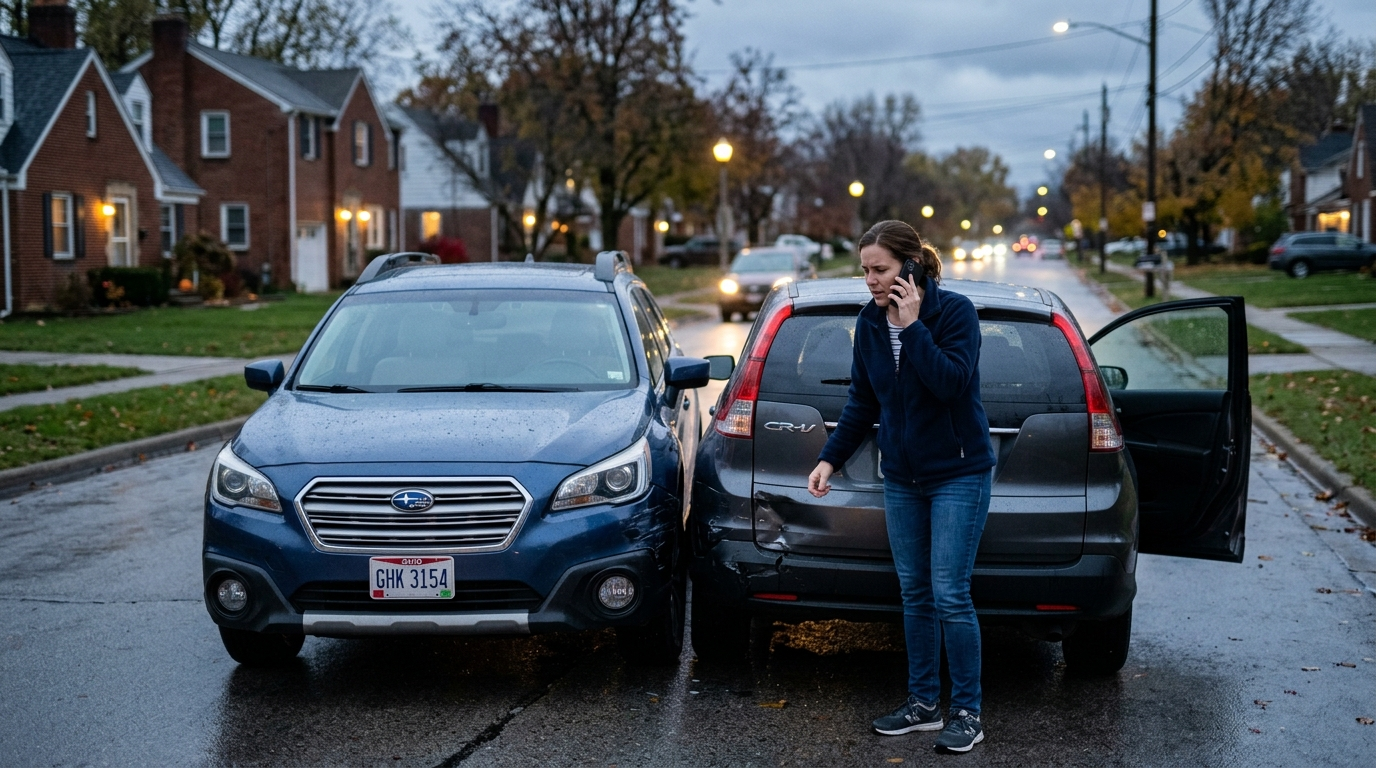
If your business owns vehicles, Ohio law requires you to carry at minimum $25,000 per person / $50,000 per accident in bodily injury liability and $25,000 in property damage . Most businesses carry higher limits because a single serious accident can far exceed the state minimums. Commercial auto also covers cargo, hired vehicles, and non-owned vehicles driven by employees on company business. Our guide to commercial auto insurance in Ohio covers these scenarios in more detail.
Professional liability (errors and omissions)
Professional liability insurance , also called errors and omissions (E&O), protects service-based businesses if a client claims your advice or work caused them financial harm. This coverage matters for accountants, architects, IT consultants, real estate agents, and anyone else who charges for professional expertise. General liability does not cover professional errors, so this is a separate and necessary policy for many Ohio businesses.
Cyber liability insurance
Data breaches and ransomware attacks are not limited to large corporations. Small Ohio businesses are frequently targeted because attackers assume security is weaker. Cyber liability insurance covers notification costs, credit monitoring, regulatory fines, and recovery expenses after a breach. Ohio enacted the Ohio Data Protection Act (OHIO REV. CODE § 1354), which provides an affirmative defense to certain data breach lawsuits for businesses that follow a recognized cybersecurity framework. Having cyber coverage is part of a solid risk management program regardless of your size.
Commercial umbrella insurance
A commercial umbrella policy sits above your general liability, commercial auto, and employers' liability limits. If a judgment exceeds your underlying policy limit, the umbrella picks up the difference, typically in increments of $1 million . For businesses with significant public exposure, vehicle fleets, or contract requirements demanding higher limits, an umbrella is an affordable way to add a meaningful buffer.
What Ohio law requires vs. what you actually need
Ohio does not require most private businesses to carry general liability insurance as a matter of state law, though industry-specific licensing boards, landlords, and clients often impose their own requirements. Workers' compensation is the primary state mandate for employers. Commercial auto minimums apply to business-owned vehicles just as they do to personal vehicles.
The gap between "legally required" and "adequately protected" is where most small business owners run into trouble. A $30,000 property damage claim from a client whose office you accidentally damaged, or a $200,000 jury verdict in a slip-and-fall case, can wipe out a small business that carried only what was technically required. The right coverage level depends on your industry, revenue, number of employees, and the specific contracts you sign.
Ohio businesses in certain industries also face additional requirements. Contractors may need surety bonds to pull permits or bid on public projects. Liquor establishments need liquor liability coverage. Businesses in transportation face federal and state minimum liability requirements that exceed standard commercial auto limits.
How much does business insurance cost in Ohio
Cost varies widely based on your industry, payroll, revenue, location, claims history, and the coverages you select. Here are realistic ballpark ranges for common Ohio small businesses:
- General liability (standalone): a retail shop or small office might pay $500 to $1,500 per year ; a contractor might pay $2,000 to $6,000 or more depending on scope of work.
- Business owners policy: a small Main Street business with moderate property values and general liability often lands in the $1,000 to $3,000 per year range.
- Workers' compensation: Ohio BWC rates are set by classification code and experience modifier; a clerical worker might cost less than $0.50 per $100 of payroll while a roofing laborer could cost $15 to $30 or more per $100 of payroll .
- Professional liability / E&O: most consultants and service professionals pay $800 to $2,500 per year for basic limits.
- Commercial auto: a single business vehicle with standard limits often runs $1,200 to $2,500 per year ; fleets and higher-risk use cases cost considerably more.
- Cyber liability: a small business policy with $500,000 in coverage might cost $500 to $1,500 per year depending on the industry and security practices.
The best way to know your actual cost is to work with an independent agent who can run your risk profile against multiple carriers and find the combination of coverage and price that fits your situation.
Industry-specific considerations for Ohio businesses
Ohio has a diverse economy, and the insurance needs of a Northeast Ohio manufacturer look very different from those of a Columbus-area staffing agency or a Geauga County landscaper. A few notes by sector:
Construction and contractors
Ohio contractors need general liability, workers' compensation, commercial auto, and often builders risk for specific projects. If you work on public contracts, surety bonds are frequently required. Our construction insurance guide for Ohio contractors goes deeper on the specific coverage combinations that come up most in this industry.
Restaurants and retail
Food service businesses face slip-and-fall exposure, liquor liability if alcohol is served, equipment breakdown risk from walk-in coolers and commercial kitchen equipment, and employee injury claims. A BOP often forms the core, with liquor liability and workers' compensation added separately.
Professional services
Accountants, IT firms, engineers, and consultants in Ohio need to pair a BOP or general liability policy with professional liability (E&O) coverage. A general liability policy explicitly excludes claims arising from professional errors, so the two work together rather than overlapping.
Nonprofits and small manufacturers
Nonprofits with boards of directors face unique exposures addressed by directors and officers (D&O) insurance. Ohio manufacturers often need inland marine coverage to protect equipment and inventory in transit, along with product liability coverage built into their general liability policy.
How to choose the right business insurance in Ohio
The process matters almost as much as the policy. A practical approach:
- Start with a risk inventory. List your physical assets, your employees, your vehicles, your revenue sources, and your top "what if" scenarios. A fire? A lawsuit? A key employee injury? This shapes which coverages you prioritize.
- Check your contracts and leases. Landlords, general contractors, and larger clients often specify minimum coverage limits. Pull those requirements before you shop.
- Work with an independent agent. A captive agent works for one carrier. An independent agent represents multiple carriers and can place your business with the one that prices your industry most competitively. That distinction matters when your renewal comes around.
- Review annually. Your coverage needs change as your business grows. A policy that was adequate at $500,000 in revenue may leave gaps when you reach $2 million .
- Do not let price drive the entire decision. The cheapest policy that leaves you exposed to a six-figure gap is not actually cheap. Compare coverage terms, not just premiums.
If you want a broader overview of the commercial insurance options available to Ohio businesses, our post on commercial insurance basics for Ohio small business owners is a good starting point.
Work with Love Insurance Agency to protect your Ohio business
Love Insurance Agency is an independent insurance agency serving businesses across Northeast Ohio, including Chardon, Geauga County, and the greater Cleveland area. Because we are independent, we compare coverage and pricing across multiple carriers to find the combination that fits your business, not a single carrier's product lineup.
Whether you are buying your first policy, reviewing a renewal, or adding coverage as your business grows, our commercial lines team can walk you through your options and make sure you are not paying for coverage you do not need or missing coverage you do. Call us at (440) 527-5050 or reach out through our contact page to get started. You can also visit our commercial insurance overview to see the full range of coverages we work with.
Get A Quote
At Love Insurance Agency, securing your future is easy. Ready to protect what matters? Contact us for a quick quote and personalized insurance options!
Kelly
Speak to Kelly 24/7
Microphone ready
Start your custom insurance quote
Instant answers to your insurance questions
Schedule appointments or follow-ups
Personal Insurance
From auto and homeowners to renters and umbrella policies, we help protect your family and property. Let’s find coverage that fits your life.
Commercial Insurance
We customize policies for your industry's risks, like general liability and workers' comp, ensuring you can run your business worry-free.
Contact Love Insurance Agency
info@segurosidealinc.com
373 Center Street, STE A, Chardon, Ohio 44024, United States