Filing a Commercial Property Hail Damage Claim in Ohio Guide
Filing an Ohio commercial property hail damage claim the right way
Ohio businesses take a beating from hail every spring and summer. A storm that rolls through Geauga, Lake, or Cuyahoga County can drop golf-ball-sized hail in minutes, leaving behind dented HVAC units, punched-through roof membranes, shattered skylights, and water damage that shows up weeks later. If your building just took a hit, how you handle the first 72 hours of your Ohio commercial property hail damage claim will directly affect how much you recover and how fast you get back to business. The steps below cover everything from the moment the storm clears to the day you cash the settlement check.
What commercial property insurance actually covers after a hailstorm
Before you call your carrier, it helps to know what you are dealing with. A standard commercial property policy covers direct physical loss to your building and business personal property caused by hail, unless hail is specifically excluded. In Ohio, hail exclusions are uncommon on standard commercial forms, but you may face a separate windstorm and hail deductible that differs from your all-other-perils deductible.
Coverage typically includes:
- Roof and roofing systems : membrane punctures, shingle damage, flashing failures, and any resulting interior water intrusion.
- HVAC and rooftop equipment : condensers, exhaust units, and ventilation hoods are prime hail targets and are generally covered as building components.
- Exterior cladding and windows : siding dents, broken skylights, storefront glass, and damaged signage mounted to the building.
- Business personal property : inventory, equipment, and furnishings damaged by water that entered through hail-created openings.
- Additional structures : carports, fencing, detached storage buildings, and loading docks covered under the same policy.
What is generally not covered: pre-existing deterioration that a carrier can argue made the roof vulnerable, damage below the deductible threshold, and losses to vehicles in the parking lot (those fall under commercial auto coverage). Check your declarations page for your specific windstorm and hail deductible before you assume the full loss will be covered dollar for dollar.
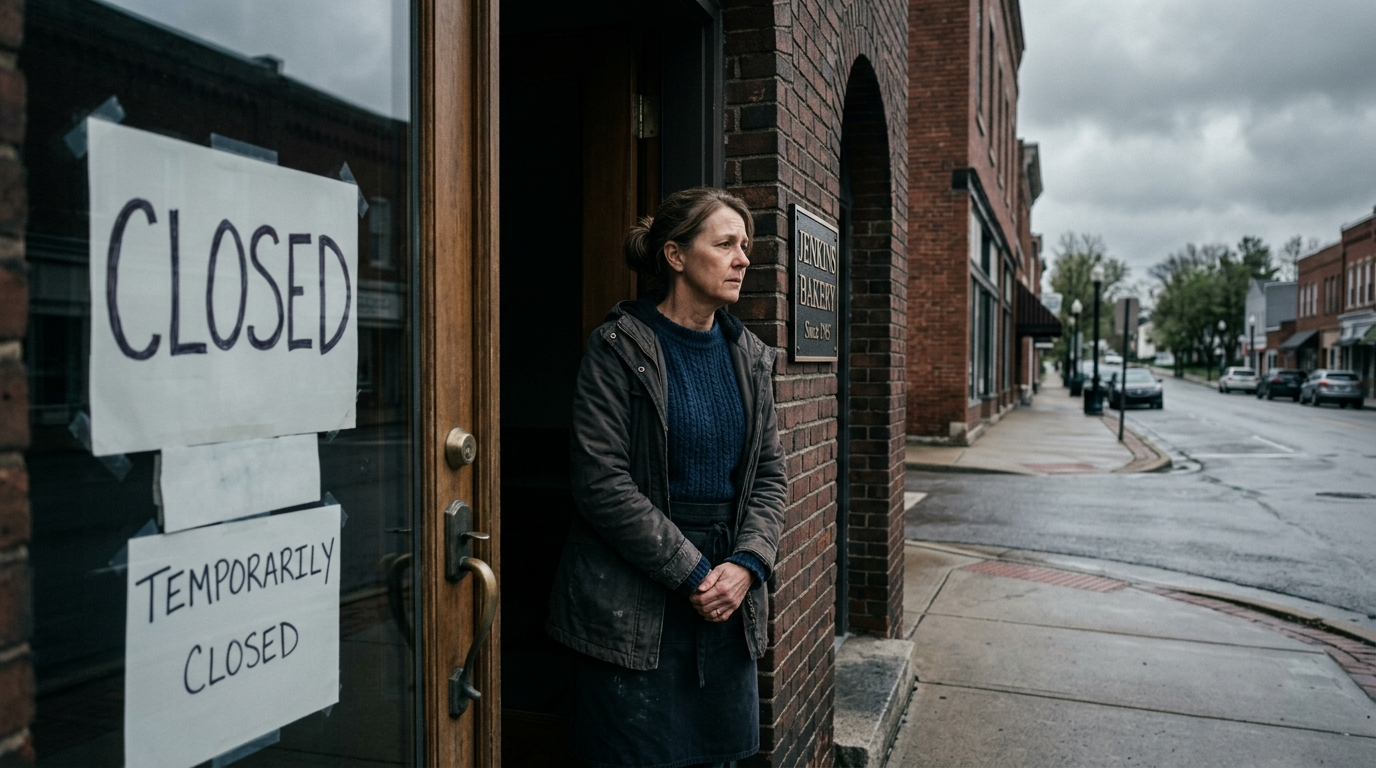
If you also suffered lost income because the storm forced a temporary closure, that is handled under a separate coverage. Our post on business interruption insurance in Ohio explains how that works.
Step one: secure the property and document everything
Do not wait for the adjuster before you act. Ohio courts and insurance regulations are clear that policyholders have a duty to mitigate further damage. If your roof has holes, get tarps up. If windows are broken, board them. Save every receipt for emergency repairs because your policy almost certainly reimburses reasonable temporary repair costs as part of the claim.
Documentation is where many business owners leave money on the table. Do this immediately after the storm:
- Photograph and video every inch of the exterior. Shoot wide angles, then close-ups of each damaged area. Date-stamped photos from your phone are admissible evidence in any coverage dispute.
- Photograph the interior. Water stains on ceilings, wet inventory, and pooling water all need to be captured before any cleanup begins.
- Document rooftop equipment. If you can safely access the roof (or hire someone who can), photograph every piece of equipment with visible impact craters.
- Pull the weather data. NOAA's Storm Events Database and private services like Verisk's weather verification tools can produce a hail size and intensity report for your exact address on the date of loss. Adjusters use this data, and you should too.
- List all damaged items. For business personal property, pull your inventory records and create a line-item spreadsheet of every damaged or destroyed item with purchase date, purchase price, and current replacement cost if you know it.
The more objective evidence you assemble in the first 48 hours, the harder it is for a carrier to dispute the scope of damage later.
Step two: report the claim promptly
Ohio law does not set a single statutory deadline for commercial property claims, but nearly every policy requires you to report the loss "as soon as practicable." Waiting weeks after a storm gives your carrier grounds to question whether the damage is even storm-related. Call your agent or the carrier's claims line within 24 to 48 hours of the event, even if you have not finished documenting everything yet. You can supplement the claim with additional documentation later.
When you report the claim, have these ready:
- Your policy number and the insured address of the property.
- Date and approximate time of the storm.
- A brief description of visible damage. Do not speculate about causes or try to estimate dollar amounts at this stage.
- Your contact information and the best way for the adjuster to reach you.
Ask for a claim number immediately. Everything that happens from this point forward should reference that number in writing.
Step three: work with the insurance adjuster
Once your claim is filed, the carrier assigns an adjuster. For a large hailstorm that hit a wide area (common in northeast Ohio), your adjuster may be managing dozens of claims at once. The following steps will keep your claim from getting lost in the queue.
Meet the adjuster at the property
Whenever possible, be present for the inspection. Walk every inch of the property with the adjuster and point out damage they might otherwise overlook, especially rooftop equipment and interior water intrusion. Ask the adjuster to explain their scope of damage assessment as they go, and take your own notes.
Get an independent contractor estimate
You are allowed to hire your own roofing contractor or general contractor to prepare a written repair estimate before or alongside the adjuster's inspection. A qualified contractor experienced with commercial properties will catch items an adjuster may miss: flashing replacements, code-upgrade costs (Ohio local building codes sometimes require full system replacements when damage exceeds a certain percentage of the roof area), and interior remediation scope.
Understand the payment structure
Most commercial property policies pay on a replacement cost value (RCV) or actual cash value (ACV) basis, depending on how the policy is written. Under RCV, the carrier pays what it costs to repair or replace the damaged property with like kind and quality, without deducting for depreciation. Under ACV, the carrier deducts depreciation first and releases the remaining holdback only after you complete the repairs.
If your policy is RCV and the carrier issues an initial ACV payment, that is a first installment, not the full settlement. Complete the repairs, submit your invoices, and request the depreciation holdback release.
Watch for a supplemental claim opportunity
Hail damage is often more extensive than the initial inspection reveals. Once demolition begins, contractors frequently discover additional damage: wet insulation, rotted decking beneath a membrane, or damaged interior framing. Most carriers accept supplemental claims when hidden damage is uncovered during repairs. Document everything your contractor finds and submit a written supplement with photos.
Step four: dispute the claim if the settlement seems low
If the adjuster's estimate is significantly lower than your contractor's estimate, you are not stuck. Ohio policyholders have several ways to push back.
Request a re-inspection
Ask the carrier to send a different or more senior adjuster, particularly if you believe the original inspection was rushed or incomplete. Provide your contractor's detailed written estimate and photographs as supporting documentation.
Use the appraisal clause
Most commercial property policies include an appraisal provision. If you and the carrier disagree on the amount of loss, each side selects a competent and disinterested appraiser. The two appraisers then select an umpire. Any two of the three must agree on the amount for it to become binding. This process is less expensive and faster than litigation, and Ohio courts have generally upheld it as a valid dispute resolution mechanism.
File a complaint with the Ohio Department of Insurance
If you believe the carrier is acting in bad faith (unreasonable delay, arbitrary denial, or refusal to explain the basis for a low settlement), you can file a complaint with the Ohio Department of Insurance at insurance.ohio.gov. Ohio Revised Code Section 3901.21 establishes unfair claims settlement practices, and carriers take ODI complaints seriously.
Consult a public adjuster or coverage attorney
For large commercial losses (say, $50,000 or more in dispute), hiring a licensed public adjuster or an Ohio insurance coverage attorney may be worth the cost. Public adjusters typically work on contingency, taking a percentage of any increased settlement they negotiate. An attorney is appropriate if the dispute reaches a bad-faith scenario.
Common mistakes that hurt Ohio commercial hail damage claims
After a storm, business owners are stressed, short on time, and focused on getting back to normal. These are the missteps that cost them money:
- Starting repairs before documentation is complete. Once you tear off a damaged roof, the evidence of hail impact is gone. Document thoroughly before any demolition.
- Signing a direction of payment to a contractor before reviewing the settlement. Some contractors ask you to sign over claim proceeds upfront. Understand exactly what you are agreeing to first.
- Accepting the first settlement without reviewing the scope. The initial payment is often not the final word. Compare the carrier's scope to your contractor's estimate line by line.
- Missing the suit limitation deadline. Most commercial property policies require any lawsuit to be filed within one to two years of the date of loss. In Ohio, the policy language typically controls over the general statute of limitations. Missing this deadline waives your right to sue.
- Not involving your agent. Your independent agent can advocate on your behalf, explain your policy terms, and help you navigate the claims process. Do not try to manage a large commercial claim alone.
How the right commercial property policy makes a difference
Not all commercial property policies are built the same. Coverage differences that seem minor at purchase become significant when you file a six-figure hail damage claim. A few things that matter:
- Replacement cost vs. actual cash value. As described above, RCV pays significantly more on an older building or aging roof.
- Ordinance or law coverage. If Ohio building codes require you to upgrade your roof system when repairing damage that exceeds 50 percent of the roof area, this coverage pays for the code-mandated upgrades your standard policy would not cover.
- Equipment breakdown endorsement. Covers HVAC and other systems that fail as a result of hail impact on mechanical components.
- Agreed value vs. coinsurance. Coinsurance clauses penalize you if the property is underinsured at the time of loss, which can reduce a legitimate claim payout substantially. Agreed value eliminates that risk.
If you are not sure how your current policy handles any of these, that is worth a conversation with your agent before the next storm season. You can also read our overview of business insurance types and costs in Ohio for a broader look at how commercial coverage is structured.
Get the right coverage before the next storm
Ohio's storm season does not give much warning. The right time to review your commercial property coverage is now, before hail is punching through your roof. At Love Insurance Agency , we are an independent agency, which means we shop multiple carriers to find coverage that fits your building, your business, and your budget. We can review your current declarations page, identify gaps like missing ordinance and law coverage or an underinsured valuation, and compare options across carriers without steering you toward any one company's products.
If you just had a hailstorm and need help understanding your claim, or if you want to make sure your policy is ready before storm season arrives, reach out to us. Call (440) 527-5050 or visit our contact page to get started. We work with Ohio businesses throughout northeast Ohio and beyond, and we know what it takes to get a claim handled right.
Get A Quote
At Love Insurance Agency, securing your future is easy. Ready to protect what matters? Contact us for a quick quote and personalized insurance options!
Kelly
Speak to Kelly 24/7
Microphone ready
Start your custom insurance quote
Instant answers to your insurance questions
Schedule appointments or follow-ups
Personal Insurance
From auto and homeowners to renters and umbrella policies, we help protect your family and property. Let’s find coverage that fits your life.
Commercial Insurance
We customize policies for your industry's risks, like general liability and workers' comp, ensuring you can run your business worry-free.
Contact Love Insurance Agency
info@segurosidealinc.com
373 Center Street, STE A, Chardon, Ohio 44024, United States