Construction Insurance in Ohio: A Contractor's Coverage Guide
Construction insurance in Ohio: what every contractor needs to know
If you run a construction business in Ohio, construction insurance is not optional. One uncovered jobsite accident, a theft of tools from an unfinished Cleveland build, or a subcontractor dispute can cost more than an entire project is worth. Ohio's construction industry spans residential remodeling in the Cleveland suburbs, commercial builds across Columbus and Cincinnati, and everything in between. The risks are real, the stakes are high, and most contractors find the coverage requirements more involved than they expected.
This post covers the core policies that make up a complete construction insurance program in Ohio, what Ohio law requires, and how to avoid the gaps that leave contractors exposed.
Why construction businesses in Ohio face unique risks
Ohio's weather alone creates a hostile environment for open jobsites. Harsh winters in northeast Ohio bring frozen ground, ice, and wind that damage materials and create slip-and-fall hazards. Spring flooding along river corridors in Akron, Dayton, and Columbus can swamp excavations and wash out foundations. Summer storms bring hail and high winds that can destroy framing and roofing materials overnight.
Beyond weather, the construction industry carries a higher workers' compensation claim rate than almost any other sector. The Ohio Bureau of Workers' Compensation (BWC) tracks construction as one of the most injury-prone classifications. Falls, power tool injuries, and equipment accidents are common. A single serious injury claim can push a small contractor's BWC experience modifier up sharply, driving premium costs for years.
There is also the liability exposure that comes from working on someone else's property. Property damage to a client's home, neighboring structures, or underground utilities is a constant risk. Completed-operations claims, where a client alleges damage after the job is done, can surface months or years after a contractor has cashed the final check.
Core coverages in a construction insurance program
A complete construction insurance program in Ohio is built from several layers. No single policy covers everything. Here is what belongs in most contractors' programs.
General liability insurance
General liability (GL) is the foundation of any contractor's coverage. It pays for third-party bodily injury and property damage claims arising from your operations. If a visitor trips over your equipment at a jobsite and breaks a wrist, GL responds. If your crew accidentally damages a customer's finished floor during a renovation, GL responds. Most Ohio project owners and general contractors require subcontractors to carry at least $1 million per occurrence / $2 million aggregate in GL limits before they will sign a contract.
Ohio does not have a state law requiring general contractors to carry GL, but lenders, project owners, and municipalities almost always do. If you want to work on commercial projects or public work, you will need it. You can learn more about general liability coverage options on our site, or read our deeper breakdown in general liability insurance for Ohio small businesses.
Builders risk insurance
Builders risk insurance covers the structure under construction and the materials going into it. It protects against fire, theft, vandalism, wind, hail, and certain other physical perils while a project is in progress. Once the certificate of occupancy is issued and the building is handed over, a standard builders risk policy expires. At that point, the owner needs a permanent property policy.
Builders risk is typically purchased by whoever has the greatest financial interest in the project: the general contractor, the property owner, or a lender. On larger Ohio commercial projects, it is often a condition of the construction loan. The policy limit should match the completed value of the structure, not just the cost of materials on hand.
Our builders risk insurance page covers policy structure and what perils are typically included or excluded.
Commercial auto insurance
Contractor vehicles are tools of the trade. Pickup trucks, flatbeds, dump trucks, and vans moving crews and materials across Ohio roads need commercial auto insurance , not personal auto. Ohio requires minimum liability coverage on all registered vehicles, but those minimums are almost never adequate for a business vehicle involved in a serious accident.
If your employees drive their personal vehicles for work purposes, hired and non-owned auto coverage fills the gap. A personal auto policy typically excludes coverage when the vehicle is being used for business purposes. Our post on commercial auto insurance in Ohio covers the specifics.
Inland marine (tools and equipment coverage)
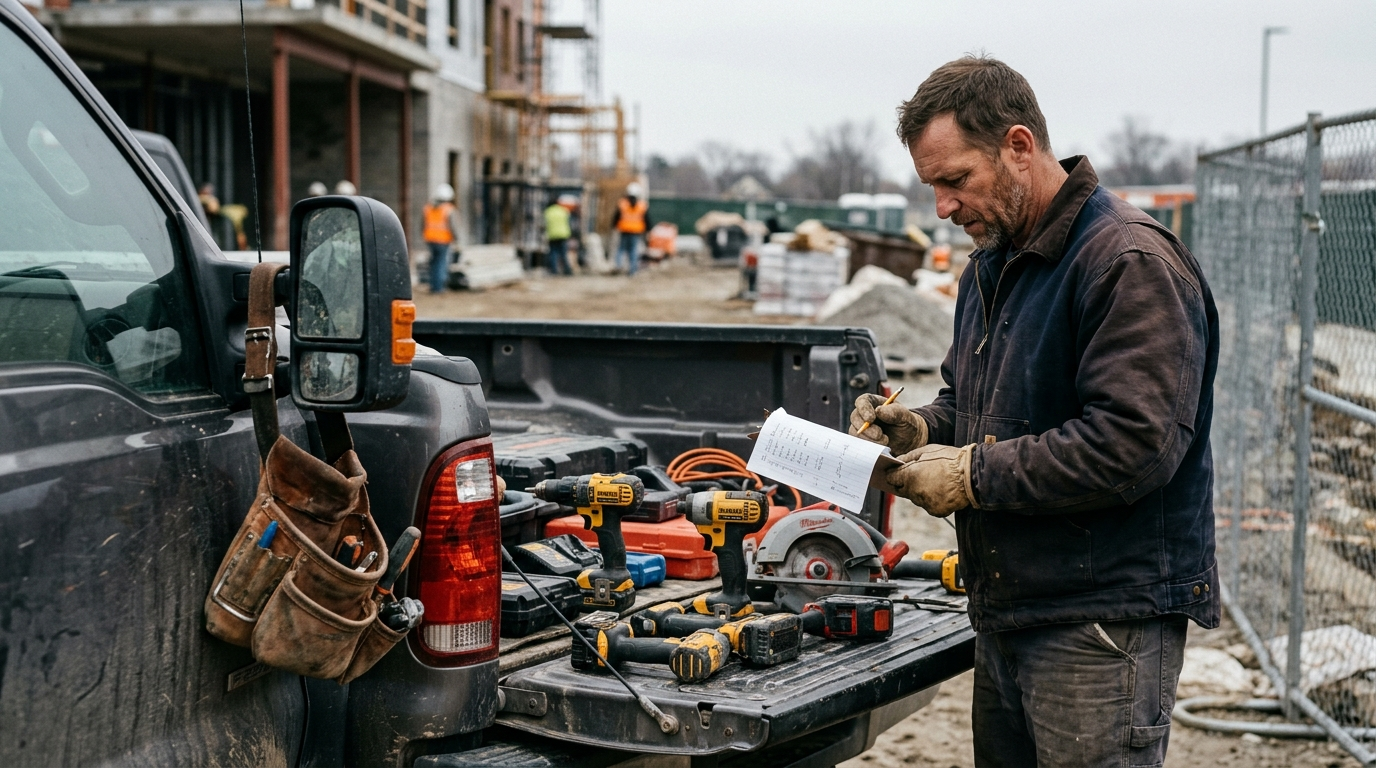
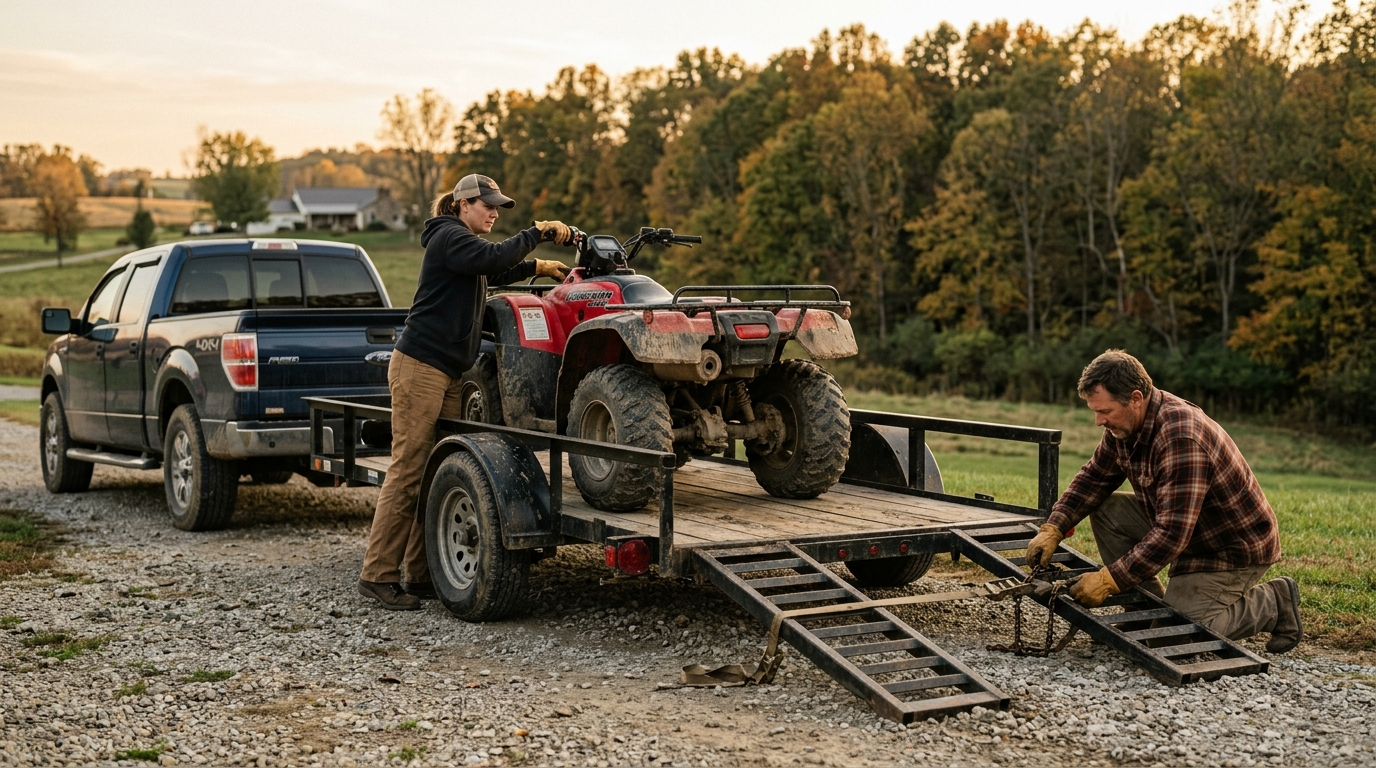
Inland marine insurance covers tools, equipment, and materials in transit and at the jobsite. Commercial property policies typically cover assets at a fixed business location. Contractors' tools move constantly, which means a standard property policy often leaves them uncovered. Inland marine, sometimes called a contractor's tools and equipment floater, follows your gear wherever it goes.
Tool theft from jobsites is a genuine problem across Ohio. Unattended equipment left overnight at a residential or commercial site is a regular theft target. Inland marine coverage can reimburse you for stolen power tools, hand tools, and small equipment without routing the claim through your general liability policy.
Workers' compensation
Ohio requires most employers to carry workers' compensation through the Ohio Bureau of Workers' Compensation (BWC) . Ohio is a monopolistic state for workers' comp, meaning coverage must come directly from the state BWC rather than a private carrier.
Workers' comp pays for medical expenses and lost wages when an employee is injured on the job. Construction employers in Ohio pay BWC premiums based on payroll and classification codes. Your experience modifier (e-mod) is calculated annually by the BWC and reflects your claims history. A clean safety record keeps your e-mod below 1.0 and your premiums lower. A string of claims drives it up, sometimes dramatically.
Sole proprietors and partners are not automatically covered under BWC but can elect coverage voluntarily. If you use subcontractors, verify that they carry their own BWC coverage. If they do not, the BWC may assess your payroll for any uninsured subs working on your jobs.
Commercial umbrella insurance
Even a $2 million general liability aggregate can be wiped out by a single serious construction accident. A commercial umbrella policy sits above your GL, commercial auto, and employers' liability limits and provides an additional layer of protection, typically starting at $1 million and going up from there.
For larger contractors working on commercial or public projects in Ohio, umbrella limits of $5 million or more are increasingly common as a contract requirement. An umbrella is usually one of the most cost-effective ways to increase your total coverage limits meaningfully.
Surety bonds: not insurance, but often required
Surety bonds are not insurance policies. They are three-party agreements between a contractor (the principal), a project owner or government entity (the obligee), and the surety company. If the contractor fails to perform, the surety steps in to complete the project or compensate the obligee.
Ohio contractors working on public projects are typically required to provide a performance bond and a payment bond under Ohio Revised Code Section 153.54 for contracts over $50,000. The performance bond guarantees the project gets finished. The payment bond guarantees subcontractors and suppliers get paid.
Private project owners increasingly require bonds as well, especially on larger builds. A contractor without bond capacity is effectively locked out of a large segment of Ohio's commercial and public construction market. Our surety bonds guide for Ohio businesses explains the different bond types and how to qualify.
Additional coverages worth considering
Depending on your trade and the type of work you do, several other coverages may belong in your program.
- Professional liability (errors and omissions): Design-build contractors, construction managers, and any contractor providing design services should consider professional liability coverage. Standard GL does not cover claims arising from design errors or professional advice. See our professional liability page for details.
- Pollution liability: Contractors involved in demolition, soil work, or work with hazardous materials face pollution exposure that GL policies typically exclude. Pollution liability covers cleanup costs and third-party claims from contamination.
- Installation floater: Similar to inland marine but specifically covering materials and equipment being installed at a jobsite. It fills the gap between the time materials leave the supplier and when they are covered by the owner's permanent property policy or a builders risk policy.
- Business interruption insurance: If a covered loss forces your business to shut down temporarily, business interruption coverage replaces lost income and pays ongoing expenses. This matters most for contractors who own yard space, equipment storage, or fabrication facilities.
- Cyber liability: Smaller contractors are now targets. If you store client data, use project management software, or send invoices electronically, a data breach or ransomware attack is a real exposure. Ohio's data breach notification law (Ohio Revised Code Chapter 1347) creates legal obligations that can add significantly to the cost of a cyber incident.
Ohio licensing and insurance requirements for contractors
Ohio does not have a single statewide contractor license the way some other states do. Licensing is largely handled at the local level, and requirements vary by municipality and trade. Some trades are regulated at the state level, however.
Electrical contractors in Ohio must be licensed by the Ohio Construction Industry Licensing Board (OCILB) , which also covers HVAC, hydronics, plumbing, and refrigeration. Each license category has its own insurance requirements. Most OCILB licenses require proof of general liability and, in some cases, workers' compensation.
Home improvement contractors working directly with Ohio homeowners must comply with the Ohio Home Solicitation Sales Act for certain contracts. Many counties and municipalities have their own registration requirements for home improvement contractors that include minimum insurance requirements.
If you are pulling permits in Ohio, the local building department will almost always require a certificate of insurance before the permit is issued. Make sure your certificates are current and that your limits meet the local jurisdiction's minimums, which often exceed what you expect.
How to build the right coverage program
A sole proprietor doing bathroom remodels in Geauga County has different needs than a general contractor managing multi-million-dollar commercial builds in Cuyahoga County. A few things to consider when putting your program together:
- Your trade and scope of work: Roofing, excavation, electrical, and demolition all carry elevated risks that affect both pricing and coverage terms. Some carriers will not write certain trades at all.
- Your contract requirements: Read the insurance requirements in your contracts before you bid. Required limits vary widely. A certificate of insurance that does not meet the contract requirements creates a contractual breach before the project even starts.
- Your subcontractor relationships: You may be held responsible for your subs' work. Collect certificates of insurance from every subcontractor before they set foot on your jobsite.
- Your equipment values: Inland marine coverage needs to reflect your actual tool and equipment replacement costs. Under-insuring is a common mistake that becomes obvious when a claim hits.
- Your revenue and payroll: GL premiums are typically rated on revenue. Workers' comp premiums are rated on payroll. Accurate numbers matter. Understating either to lower premiums is considered premium fraud and can result in a policy being voided at the worst possible time.
Work with an independent agency that knows Ohio construction
Getting construction insurance right in Ohio is genuinely complicated. Workers' comp through the state BWC, multiple private-market policies, surety bond capacity, and evolving contract requirements involve a lot of moving parts to coordinate. Working with an independent insurance agency gives you access to multiple carriers, not just one company's products.
At Love Insurance Agency , we work with Ohio contractors across trades and project types. As an independent agency, we compare coverage and pricing across multiple carriers to find the program that fits your work, not a generic contractor package that may leave you with gaps. We can help you coordinate your BWC coverage with your private-market policies and make sure your surety bond capacity is in place when you need it.
Ready to review your current construction coverage or build a new program from the ground up? Contact Love Insurance Agency to get started, or call us at (440) 527-5050 . You can also explore our full construction industry insurance resources and our commercial insurance coverage options to see everything we work with.
Get A Quote
At Love Insurance Agency, securing your future is easy. Ready to protect what matters? Contact us for a quick quote and personalized insurance options!
Kelly
Speak to Kelly 24/7
Microphone ready
Start your custom insurance quote
Instant answers to your insurance questions
Schedule appointments or follow-ups
Personal Insurance
From auto and homeowners to renters and umbrella policies, we help protect your family and property. Let’s find coverage that fits your life.
Commercial Insurance
We customize policies for your industry's risks, like general liability and workers' comp, ensuring you can run your business worry-free.
Contact Love Insurance Agency
info@segurosidealinc.com
373 Center Street, STE A, Chardon, Ohio 44024, United States