
Average Home Insurance Cost in Ohio 2026: What to Expect Guide
Average home insurance cost in Ohio for 2026
If you own a home in Ohio, you've probably noticed your insurance premium creeping upward over the past few years. The average home insurance cost in Ohio for 2026 sits around $1,200 to $1,500 per year for a standard policy on a $250,000 home, depending on where you live, the age of your house, and the coverage you carry. That's still well below the national average of roughly $2,200, but Ohio homeowners are seeing faster-than-average rate increases as insurers adjust for rising construction costs, more frequent severe weather, and claims inflation. This post breaks down what drives your rate, what the numbers look like by region, and where you can realistically trim your premium without gutting your coverage.
Why Ohio home insurance rates are rising in 2026
Several forces are pushing premiums higher across the state, and most of them have nothing to do with your personal claims history.
- Construction cost inflation: The cost to repair or rebuild a home is still elevated compared to 2020 levels. Labor shortages and material costs mean your home costs more to replace today, and carriers have updated their replacement cost estimates accordingly.
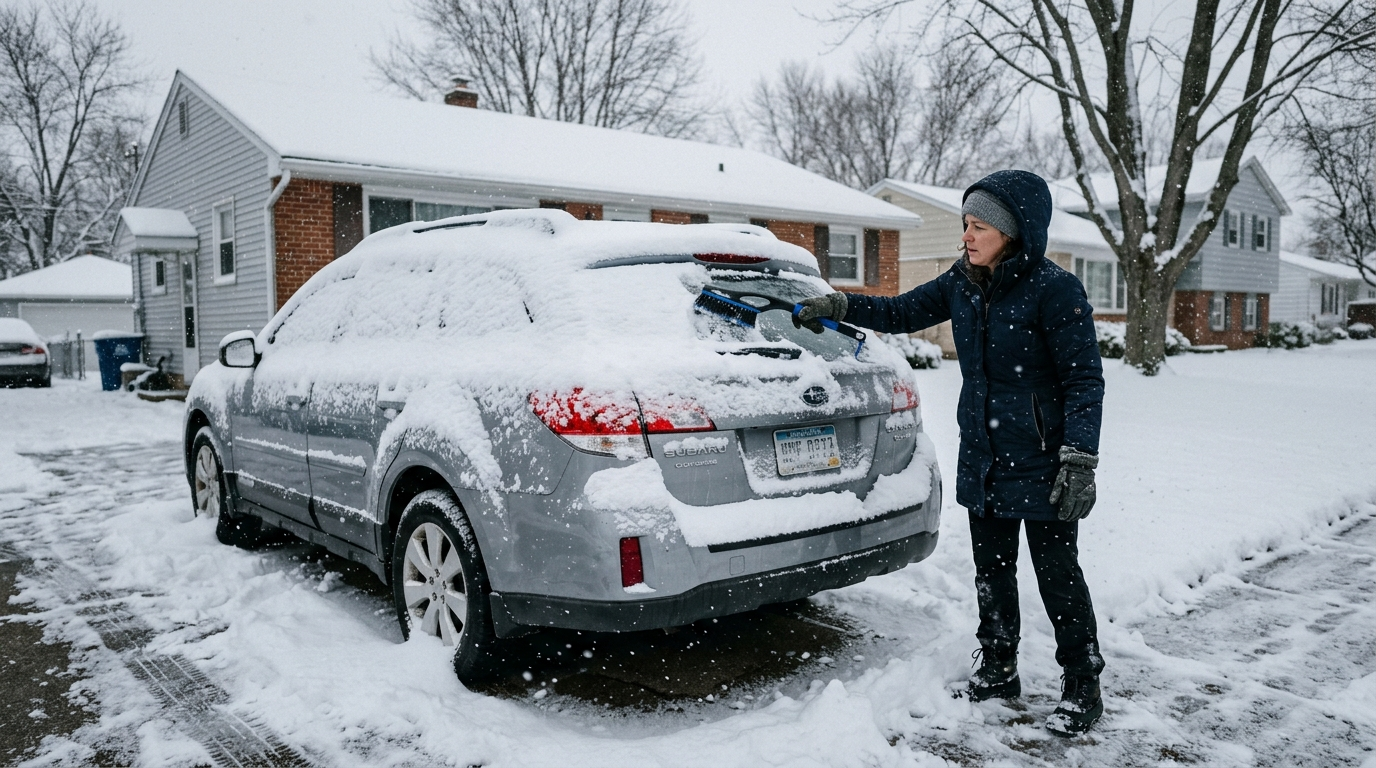
- Severe weather frequency: Northeast Ohio, including the Chardon and Lake County area, sits in a corridor that sees significant hail, wind, and heavy snow events. Carriers have filed rate increases in response to growing weather-related losses across the Midwest.
- Reinsurance costs: The companies that insure insurance companies have raised their own rates dramatically since 2021. Those costs flow downstream to policyholders.
- Claims litigation trends: Ohio has seen an uptick in roofing-related claims litigation, which adds cost for insurers and ultimately for homeowners at renewal.
- Higher coverage limits: As home values rise, dwelling coverage limits rise too, which mechanically increases premiums even if your rate per dollar of coverage stays flat.
None of this means you're stuck paying whatever your current carrier quotes. It means comparison shopping matters more now than it did a few years ago.
What the average Ohio homeowner actually pays
Statewide averages are a starting point, but your actual premium depends on your specific ZIP code, home characteristics, and insurer. Below is a general breakdown of what Ohio homeowners are seeing in 2026.
By home value
- $150,000 home: Roughly $750 to $1,000 per year for a standard HO-3 policy at replacement cost coverage.
- $250,000 home: Roughly $1,200 to $1,500 per year , which is where most of the state's housing stock falls.
- $400,000 home: Roughly $1,800 to $2,400 per year , depending heavily on location and the home's age and construction type.
- $600,000+ home: Premiums vary widely and often require specialty carriers or higher-limit endorsements.
By region within Ohio
- Northeast Ohio (Cuyahoga, Geauga, Lake, Portage counties): Rates tend to run on the higher end for the state due to older housing stock, lake-effect snow exposure, and higher claims frequency. Homeowners in Chardon and surrounding Geauga County often see premiums 10 to 15 percent above the state average .
- Central Ohio (Columbus metro): Closer to the state average, though hail exposure in the Columbus area has pushed some carriers to add separate wind/hail deductibles.
- Southwest Ohio (Cincinnati area): Moderate rates, though tornado exposure and river flooding proximity add complexity for some properties.
- Rural Ohio: Rates can go either direction. Distance from fire stations drives premiums up significantly in areas with volunteer-only fire protection and ISO Protection Class 9 or 10 ratings.
Standard vs. actual coverage costs
The figures above assume a standard HO-3 open-perils policy with dwelling coverage at full replacement cost , $100,000 in liability , and a $1,000 deductible . If you carry an extended replacement cost endorsement, higher liability limits (recommended), or a personal umbrella policy, your total spend will be higher. A higher deductible, say $2,500 or $5,000, can meaningfully lower your annual premium.
Key factors that set your specific rate
Your neighbor's premium and your own can differ by hundreds of dollars a year for reasons unrelated to claims history. The variables below matter most.
Home age and construction
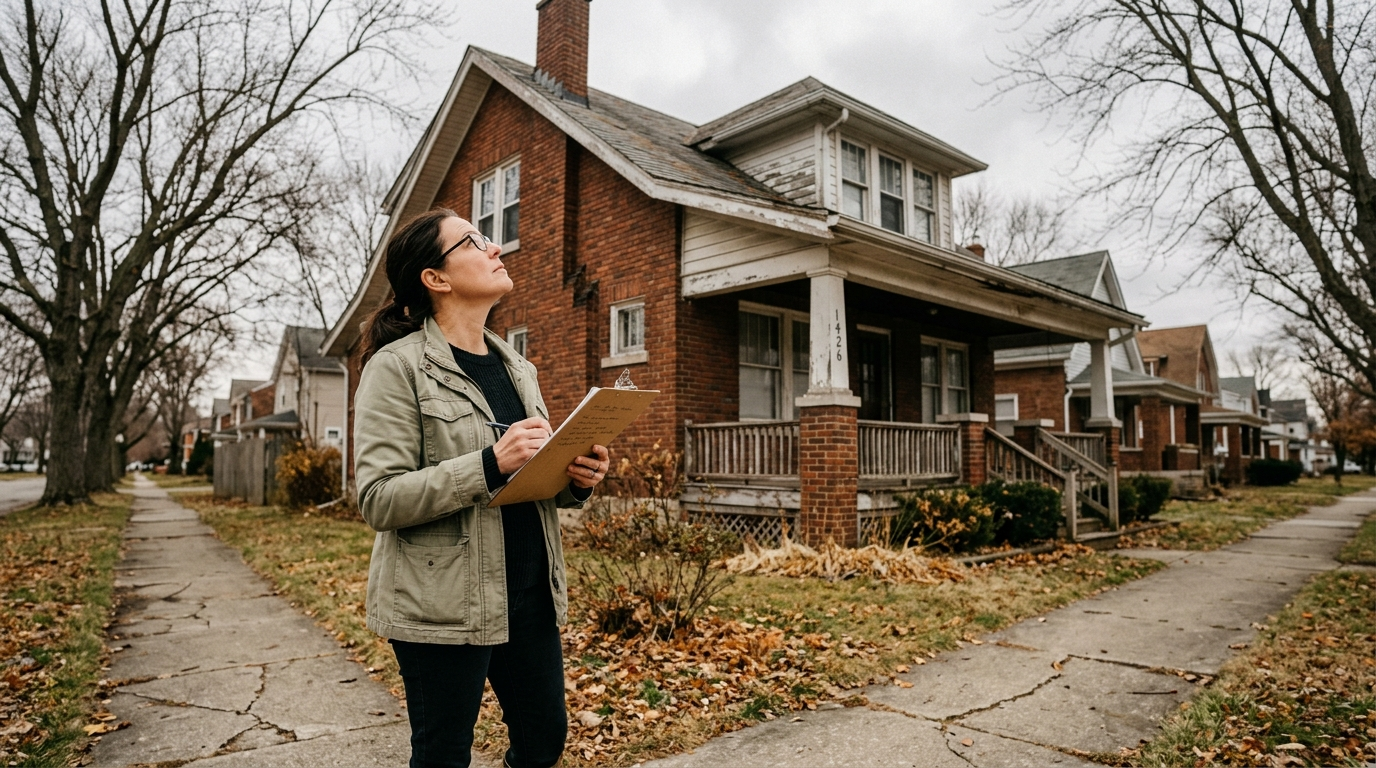
Ohio has a lot of older housing. Homes built before 1980 often have outdated electrical panels (knob-and-tube or aluminum wiring), aging plumbing, and roofs that may not meet current building codes. Carriers treat all of these as higher risk. A home built in 2005 in the same neighborhood can cost 20 to 30 percent less to insure than a comparable 1950s-era home, largely because of assumed condition and code compliance.
Roof age and material
Ohio carriers pay close attention to roofs. A roof over 15 to 20 years old may result in a premium surcharge, a reduced claims payout (actual cash value instead of replacement cost), or even a declination. Asphalt shingles are standard, but impact-resistant shingles rated Class 3 or Class 4 can earn a discount with many carriers, which matters in hail-prone northeast Ohio.
Claims history
Your personal claims history and the property's prior claims history both factor in. Multiple weather claims in three to five years can push you toward non-standard carriers with higher rates. That's worth keeping in mind before filing small claims that are only slightly above your deductible.
Credit-based insurance score
Ohio allows insurers to use credit-based insurance scores as a rating factor. This is separate from your credit score but influenced by similar data. Homeowners with strong credit profiles consistently pay lower premiums across carriers. Improving your credit over time is one of the slower but more impactful ways to reduce your cost.
Location-specific risks
If your home is near a floodplain, in a high-crime ZIP code, or more than five miles from the nearest fire station, expect higher rates. Flood damage is almost never covered under a standard homeowners policy. If you want to understand what flood coverage adds to your total insurance picture, the post on flood insurance in Ohio covers that in detail.
How to lower your home insurance premium in Ohio
Rates are rising, but there are legitimate ways to reduce what you pay without leaving yourself underinsured.
- Bundle home and auto: Most carriers offer a 5 to 20 percent discount when you insure both your home and your vehicles with the same company. This is consistently one of the highest-value discounts available.
- Raise your deductible: Moving from a $500 deductible to a $2,500 deductible can cut your premium by 15 to 25 percent. Reserve insurance for real losses, not minor repairs.
- Update your systems: New roof, updated electrical, or a new HVAC system? Tell your agent. These can qualify you for credits and may keep you eligible with preferred carriers.
- Install protective devices: Central-station monitored alarms, smart water leak detectors, and deadbolt locks all generate small but real discounts with most carriers.
- Stay claims-free: Many carriers offer claims-free discounts that grow year over year. A three-year or five-year clean history is worth protecting.
- Shop the market: Rate differences between carriers for the same home and coverage can exceed $400 to $600 per year . The market is not uniform.
For a closer look at Ohio-specific strategies, the post on ways Chardon homeowners can save on insurance goes into more tactical detail.
What your Ohio homeowners policy should actually cover
A lot of homeowners find out what their policy doesn't cover at the worst possible moment. Below is what a solid Ohio HO-3 policy should include, along with where common gaps show up.
- Dwelling coverage (Coverage A): Should reflect the full replacement cost of your home, not its market value. These numbers diverge significantly in many Ohio markets. Underinsuring your dwelling is one of the most common and costly mistakes homeowners make.
- Other structures (Coverage B): Typically 10 percent of Coverage A. Covers detached garages, fences, and outbuildings. If you have a large detached garage or workshop, check whether that limit is sufficient.
- Personal property (Coverage C): Standard is 50 to 70 percent of Coverage A, but actual cash value settlement is common unless you add replacement cost on contents. For electronics, jewelry, or collectibles, you may need scheduled endorsements.
- Loss of use (Coverage D): Pays for temporary housing if your home becomes uninhabitable after a covered loss. Standard is 20 to 30 percent of Coverage A, which may not be enough if you're displaced for an extended period.
- Liability (Coverage E): The standard $100,000 limit is often too low. Consider at least $300,000, and look at a personal umbrella policy for broader protection above that. The page on personal umbrella insurance explains how that coverage stacks on top of your home policy.
- Medical payments (Coverage F): A small limit (typically $1,000 to $5,000) that pays for minor injuries to guests on your property regardless of fault. Inexpensive and useful.
What's almost certainly not in your policy: flood damage, earthquake damage, sewer backup (unless endorsed), and normal wear and tear. Each of these is a real Ohio risk worth addressing separately.
Why working with an independent agent saves you money
When you buy directly from a single carrier, you get that carrier's rate, and nothing else. When you work with an independent agency, they can run your information through multiple carriers simultaneously and find the combination of coverage and price that fits your situation. Rates between carriers for identical homes in the same Ohio ZIP code routinely vary by 30 to 50 percent . That's not a small difference on a $1,400-a-year policy.
Independent agents also know which carriers are tightening their Ohio underwriting guidelines, which ones are competitive on older homes, and which ones have strong claims service records in the state. That market knowledge doesn't cost you extra. For more on how this works, the post on why working with an independent insurance agent in Ohio matters lays it out clearly.
Get an accurate Ohio home insurance quote for 2026
Love Insurance Agency is an independent insurance agency serving homeowners across northeast Ohio, including Chardon, Geauga County, Lake County, and the surrounding communities. We work with multiple carriers to compare your options and find coverage that makes sense for your home, your budget, and your specific risk profile. You'll get real options, explained clearly.
To get started, reach out online at our contact page or call us at (440) 527-5050 . Comparing carriers takes a few minutes and can easily save you several hundred dollars a year. If you haven't shopped your homeowners policy in the last two or three years, 2026 is a good year to do it.
Get A Quote
At Love Insurance Agency, securing your future is easy. Ready to protect what matters? Contact us for a quick quote and personalized insurance options!
Kelly
Speak to Kelly 24/7
Microphone ready
Start your custom insurance quote
Instant answers to your insurance questions
Schedule appointments or follow-ups
Personal Insurance
From auto and homeowners to renters and umbrella policies, we help protect your family and property. Let’s find coverage that fits your life.
Commercial Insurance
We customize policies for your industry's risks, like general liability and workers' comp, ensuring you can run your business worry-free.
Contact Love Insurance Agency
info@segurosidealinc.com
373 Center Street, STE A, Chardon, Ohio 44024, United States