
Flood Insurance in Ohio: What Every Homeowner Should Know Guide
Why flood insurance in Ohio matters more than most homeowners think
Flood insurance in Ohio is one of the most overlooked gaps in a homeowner's coverage plan, and that gap can be financially devastating. A common assumption is that flooding is a coastal problem, something that happens in Louisiana or Florida, not in northeast Ohio. But FEMA data tells a different story: Ohio consistently ranks among the top Midwestern states for flood damage claims, and the majority of those claims come from properties outside high-risk flood zones. If your home sits near the Grand River, the Cuyahoga, the Chagrin, or any of the dozens of smaller streams and tributaries that run through Lake, Geauga, and surrounding counties, you have real flood exposure that your standard homeowners policy does not cover.
What your homeowners policy does not cover
Most people learn this at the worst possible time: a standard homeowners insurance policy explicitly excludes flood damage. It does not matter how much water entered your home or what caused it. If the source was rising surface water, an overflowing creek, storm surge, or runoff from heavy rain saturating the ground, the loss is not covered under a typical homeowners policy. This is not buried in fine print. It is a categorical exclusion written directly into the policy form.
A standard homeowners policy does cover water damage from sudden, internal sources such as a burst pipe or an overflowing washing machine. But the moment water originates from outside your home and enters through the foundation, windows, doors, or any ground-level opening, you are looking at an uninsured loss without a separate flood policy in place.
Renters are in the same situation. A standard renters insurance policy does not cover your belongings if the apartment floods from a storm event. That is worth knowing if you rent in a low-lying area or near a waterway.
How flood insurance in Ohio actually works
There are two main ways to get flood coverage: through the National Flood Insurance Program (NFIP), administered by FEMA, or through a private flood insurance carrier. Understanding both options helps you make a better choice for your specific situation.
The National Flood Insurance Program (NFIP)
The NFIP is a federal program that makes flood insurance available to homeowners, renters, and business owners in participating communities. Most Ohio communities, including those in Lake and Geauga counties, participate in the NFIP, which means you can purchase a policy through a licensed agent. NFIP policies have two separate components:
- Building coverage covers the structure itself, including the foundation, electrical and plumbing systems, HVAC equipment, and built-in appliances. The maximum coverage limit under the NFIP is $250,000 for a residential building.
- Contents coverage covers personal property such as furniture, clothing, and electronics up to a maximum of $100,000 .
One important detail: NFIP policies have a standard 30-day waiting period before coverage takes effect. If a major storm is forecast and you call to buy a policy the day before heavy rain arrives, you will not be covered for that event. This is why purchasing flood insurance well in advance matters.
Private flood insurance
Private flood carriers have grown as an alternative to the NFIP. In many cases, private policies offer higher coverage limits, shorter waiting periods (sometimes as little as 10 to 14 days), and broader coverage terms. They can also be more competitively priced for lower-risk properties. For homeowners whose replacement cost value exceeds the NFIP's $250,000 building cap, a private policy or an excess flood policy stacked on top of an NFIP policy is often the right answer. An independent agent can compare both options and explain the tradeoffs clearly.
Flood zones in Ohio and what they mean for your premium
FEMA maintains Flood Insurance Rate Maps (FIRMs) that designate flood zones across the country. Your flood zone determines whether your mortgage lender requires you to carry flood insurance and plays a significant role in setting your premium.
- Zone AE (high risk) covers areas with a 1% annual chance of flooding, sometimes called the 100-year floodplain. Lenders are required to mandate flood insurance for federally backed mortgages in these zones.
- Zone X (moderate to low risk) covers areas outside the 100-year floodplain. No mandatory purchase requirement applies, but FEMA reports that roughly 25% of all flood claims come from outside high-risk zones. Many Ohio homeowners live in Zone X and wrongly assume they have no meaningful flood risk.
- Zone AO and Zone AH are shallow flooding zones, often associated with sheet flow or ponding. These appear in parts of Ohio where topography channels runoff across broad, flat areas.
You can look up your property's flood zone on FEMA's Flood Map Service Center at msc.fema.gov. If your property is in Zone X but sits near a creek or in a low-lying neighborhood, the cost of a preferred-rate flood policy may be more affordable than you expect.
Ohio-specific flood risks worth knowing
Northeast Ohio's climate creates flood conditions that residents sometimes underestimate. The lake-effect weather pattern that dumps heavy snow in winter also produces intense spring rain events as that snowpack melts rapidly. The combination of saturated ground, frozen soil that cannot absorb additional water, and heavy precipitation can push streams over their banks faster than many homeowners expect.
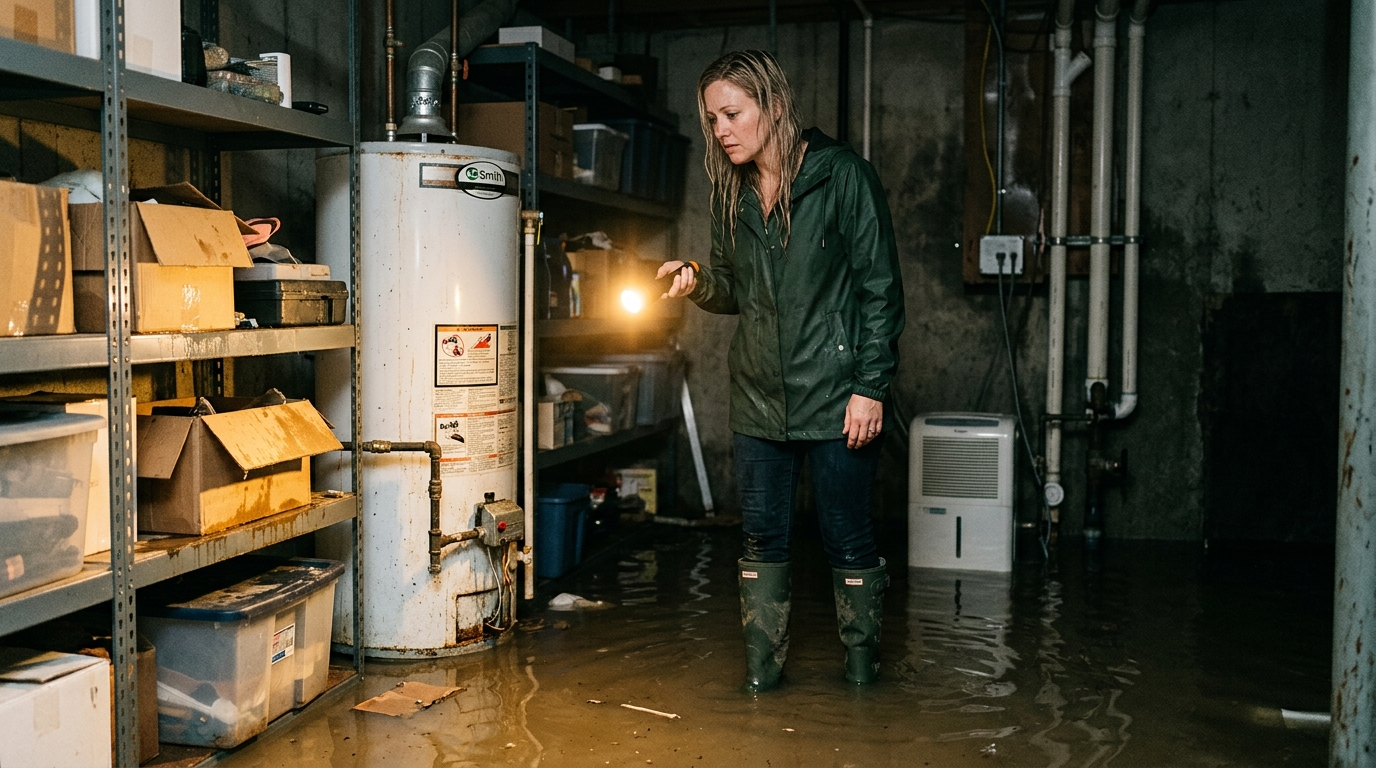
Several areas in Lake and Geauga counties have seen repeated flooding along the Grand River corridor, portions of Mentor Marsh, and low-lying subdivisions near smaller tributaries. Communities like Painesville, Madison, and parts of Chardon have properties in or near mapped flood zones. Flooding in Ohio is not limited to those communities, though. Basement flooding from surface water intrusion affects neighborhoods well outside mapped high-risk areas, particularly during the intense rain events that have become more frequent in recent years.
It is also worth noting that Ohio's participation in the NFIP's Community Rating System (CRS) can earn policyholders discounts on their NFIP premiums. Communities that adopt stronger floodplain management practices receive a CRS classification, and residents in those communities receive a percentage discount on their flood insurance premiums. Ask your agent whether your community participates and what discount applies.
How much does flood insurance cost in Ohio
Premiums vary based on flood zone, elevation, coverage limits, and the structure of your home. Under the NFIP's updated Risk Rating 2.0 methodology (which replaced the older zone-based pricing in 2021), premiums are now calculated using individual property characteristics including distance to a flooding source, foundation type, first-floor elevation, and the cost to rebuild the structure.
For a low-to-moderate risk property in Ohio, NFIP premiums can run from roughly $400 to $900 per year for a policy that includes both building and contents coverage. Higher-risk properties, or those that have experienced prior flood losses, will see significantly higher premiums. Private flood policies may come in below or above those figures depending on the carrier and the specific risk factors involved.
The most effective way to understand what a flood policy will actually cost for your home is to have an independent agent run quotes across multiple options. What you find may differ from what a neighbor paid, because individual property characteristics matter so much under Risk Rating 2.0.
For broader context on what Ohio homeowners pay across all their property coverages, our Ohio homeowners insurance cost guide walks through the factors that affect overall premiums.
Common questions about flood insurance in Ohio
Does my mortgage lender require it?
If your home is in a Special Flood Hazard Area (SFHA) and you have a federally backed mortgage (FHA, VA, Freddie Mac, Fannie Mae, and most conventional lenders fall into this category), your lender is required by law to mandate flood insurance. If you let that policy lapse, the lender has the right to purchase a lender-placed policy and charge you for it. Lender-placed policies typically cost significantly more and protect only the lender's interest, not your belongings or your full rebuilding cost. Keeping your own policy in force is always the better move.
What about sewer backup or water seepage?
Sewer backup and water seepage from a failing foundation are not the same as a flood loss, and neither is automatically covered by a standard homeowners policy or a flood policy. Sewer backup coverage is typically an endorsement added to a homeowners policy. Water seepage or leakage through a foundation over time is generally treated as a maintenance issue and excluded from both homeowners and flood policies. If sewer backup risk concerns you, ask your agent to add that endorsement specifically.
Can I get flood insurance if I rent?
Yes. Renters can purchase an NFIP contents-only policy or a private flood policy to cover their personal belongings. The building itself is the landlord's responsibility to insure, but your furniture, electronics, clothing, and other possessions are not covered by your landlord's policy. If you rent in a low-lying area, a contents-only flood policy is worth looking at closely.
Is there a waiting period every time I renew?
No. The 30-day waiting period applies when you purchase a new NFIP policy. Renewals do not restart the waiting period as long as coverage remains continuous. This is another reason to purchase well in advance and never let the policy lapse.
Get the right flood coverage for your Ohio home
Flood insurance is not a one-size-fits-all product, and the right answer for your property depends on factors that take more than a quick online form to evaluate. At Love Insurance Agency, we are an independent agency, which means we work with multiple carriers and can compare both NFIP options and private flood policies side by side to find what fits your coverage needs and your budget.
Our team works with homeowners across northeast Ohio, and we understand the local geography and the flood risks that come with living near Lake Erie's tributaries and the region's varied terrain. We will look at your flood zone, your home's characteristics, and what you actually need covered, then walk you through the real options in plain language.
To learn more about your flood coverage options or to get a quote, contact Love Insurance Agency online or call us at (440) 527-5050 . You can also explore our full range of personal insurance coverage options to make sure the rest of your coverage picture is as solid as your flood protection.
Get A Quote
At Love Insurance Agency, securing your future is easy. Ready to protect what matters? Contact us for a quick quote and personalized insurance options!
Kelly
Speak to Kelly 24/7
Microphone ready
Start your custom insurance quote
Instant answers to your insurance questions
Schedule appointments or follow-ups
Personal Insurance
From auto and homeowners to renters and umbrella policies, we help protect your family and property. Let’s find coverage that fits your life.
Commercial Insurance
We customize policies for your industry's risks, like general liability and workers' comp, ensuring you can run your business worry-free.
Contact Love Insurance Agency
info@segurosidealinc.com
373 Center Street, STE A, Chardon, Ohio 44024, United States